Reflections on the loss of a Christian leader

Read Time: 10 minutes
by AJ Canterbury
I spent most of September 10 with my phone on SOS as I subbed in a classroom with poor cellular connectivity. I was used to not getting text messages or news notifications, so the stray notification that fought through the silence with the report Charlie Kirk had been shot, captured my undivided attention. With no internet to gather more information, I could only pray, relying on God’s full awareness of the situation.
My mind assured me that shots had been fired on the campus he was on or that he had caught a stray bullet. I couldn’t fathom the worst, but when I got home and could open X, the reports already verified that he was dead. I was visually assaulted with images and videos, and it felt like my stomach would swallow my insides as my mind considered what outcomes this event would produce.
I first heard of Kirk as a Republican voice who engaged and debated college students by introducing them to an alternative, conservative philosophy. I appreciated him for that and found his efforts worthwhile. His videos on abortion and the founding of the nation on Christian principles showcased both his intellect and well-articulated arguments as well as revealed his godly principles. The more videos I watched, the more apparent it became how his deep theological beliefs and spiritual transformation shaped his political views. Not only did my respect for him grow, but I came to regard him as a fellow brother, courageous and worth emulating.
So, his murder felt personal. I wanted to dismiss the reports as fiction; they got the wrong information. Besides denial, a flurry of emotions struck me: anger, disgust, injustice and loss. It was legitimate grief, grief for a man I had never met, but whose voice the world needed to hear more from. That voice had been silenced forever.

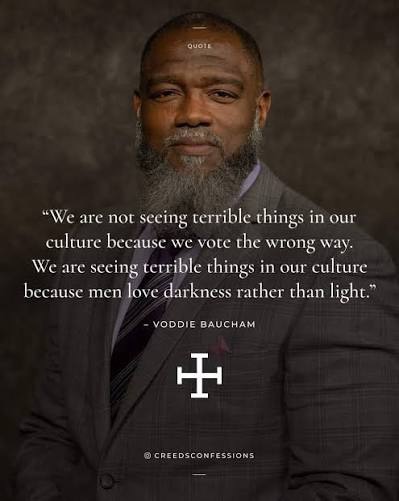
The memorial service and rise in Christian interest sparked hope that God was making good on his promise to “work all things for good’ (Rom 8:28), but then, a week later, Voddie Baucham was called home to glory. Both the deaths of Kirk and Baucham followed the loss of John MacArthur, three men who met the public square head-on with uncompromising biblical truth. I do not doubt that God is sovereign and is using all this death and attack for his glorious purposes. I wait for him to accomplish what he intends for it all.
But whether God intends to bring judgement or revival (or some combination), I want to be found faithful. My eyes keep turning to the cross and God’s word as I seek to understand why the world wanted Kirk dead, how Christianity should influence politics, and what my role in joining God’s commission looks like.
It isn’t enough [for Satan] to snuff out a life, he desires to stamp out any glowing ember to keep the world in darkness.
- The Great Battle Rages On
When I became a Christian, my eyes opened to the cosmic war waging about me. The world operates with hostility towards, and in active rebellion against, the God who created and sustains it. Satan fuels humanity’s rebellion by keeping them blind to the goodness of God. The supernatural forces of evil are opposed to all movements of God, set to wipe out any cultural witness to God’s redemption.
The book of Revelation, although not a letter known for its clarity, offers helpful (and hopeful) insights of the ancient conflict between Satan and Man. In his vision, John sees a pregnant woman (Israel) being pursued by a dragon (Satan), who waits to devour her child (the Messiah). Unable to kill Jesus as a child, Satan also fails when Jesus dies on the cross and God resurrects him and calls him up to heaven. The dragon focuses on pursuing the woman to punish her, but God continues to save Israel from his attacks. Infuriated by God’s continual rescue of her, the dragon declares war on her offspring, those “who keep the commandments of God and hold to the testimony of Jesus” (17).
This apocalyptic vision explains why living as a committed Christian puts a target on the believer’s back: Satan, the ancient dragon, still hunts the children of God. This is why Kirk was assassinated. Without a doubt, the man who pulled the trigger bears responsibility for his evil, even the violent rhetoric from our culture shares complicity, but the dragon was making good on his vow. Kirk, publicly, bore witness to the testimony of Jesus and God’s mandates for sexuality, and Satan moved to crush that witness.
Even after his death, Satan leads a continued assault on Kirk’s witness. The world, and, sadly, voices from within the church, slander his name and his character. If Kirk’s testimony can be tarnished and rejected as hateful and ungodly, then Satan accomplishes his task by squashing any shred of truth that could lead the enslaved to actual freedom. It isn’t enough to snuff out a life, he desires to stamp out any glowing ember to keep the world in darkness.
I suggested that there is hope in John’s vision, and there is. Satan seeks to devour the children of God, but he does not win. Just as God thwarted the attempts of Satan to kill Jesus prematurely or bring harm to the woman, God will frustrate Satan’s desire to wipe out believers.
An assassin’s bullet took Charlie’s life, and mortality claimed MacArthur and Baucham, but it was their Sovereign Father who called them home. Satan figured he won at the cross, but Jesus never ventured out of God’s saving hand. The future and security of God’s people, belong to him alone.
To profess and proclaim the name of Christ is to march into a warzone, a dangerous and costly wasteland, but it is the only place to encounter souls in need of redemption. God calls the dead to life, but he commissions believers to proclaim his gospel. The assassination of Kirk motivates me to engage with a hostile world because God’s good name and truth need to be heralded, and captive souls need to be liberated.
An assassin’s bullet took Charlie’s life, and mortality claimed MacArthur and Baucham, but it was their Sovereign Father who called them home.
2. Personal Faith Cannot Stay Private
Since the cosmic war is social, involving the public square, Christians don’t have the option to lead secluded lives apart from the world. Fallen humanity worships their own autonomy and builds altars through ideologies and politics. These crafted idols promise the people freedom, but only deliver further bondage. Only by confronting that idol and shining light on it can the eyes of the blind be opened.
Kirk rightly identified institutions of higher education as bastions of gospel-hostility, molding and crafting another generation of God-haters. He entered these campuses with opposing political philosophies and challenges to their paradigms. He often targeted their political idolatry with the beauty of submitting to the Lordship of Jesus.
The Apostle Paul modeled that in his evangelism when visiting synagogues, theaters, and marketplaces while calling his audience to reject their idols, believe in the Lord Jesus, and pursue righteousness. His proclamation resulted in many coming to salvation, but it also brought violent spurning. Paul knew God paraded him, like a prisoner of war in front of his enemies, to spread the aroma of Christ. That singular aroma smelled like death to those who were perishing, but it was life-giving to those who were being saved. (2 Cor 2:14-16). The assurance of God awakening souls kept Paul declaring the gospel.
Changed hearts and minds kept Kirk stepping on to campuses. MacArthur and Baucham also exemplified taking God’s truth to public spaces and confronting wickedness. They beckoned those with ears to hear to “Come.” MacArthur spent decades representing Christians in the public eye, appearing on Larry King, being interviewed by news organizations, and even going toe-to-toe with both the governor and the state of California. Baucham, likewise, believed our biblical convictions should carry over into public life, speaking with clarity on issues like race and education.
The word expose carries more than what naturally results from living a righteous life. [It] associates strongly with the proclamation of the world and confrontation to what is untrue and ungodly.
To one of the churches Paul established, he writes, “Therefore do not become partners with [the world] for at one time you were darkness, but now you are light in the Lord. Walk as children of light.” Paul instructs the church to speak, act, and behave in a way that does not look like the world at all, and not to partner with them or their behavior. However, he is not encouraging them to wash their hands and dismiss a world corrupted by darkness either. He calls them to assume a proactive position against the world’s idolatry: “Take no part in the unfruitful works of darkness but instead expose them” (Eph. 5:7-8, 11).
The word expose carries more than what naturally results from living a righteous life. Certainly, as you love your family to the Glory of God and observe his commandments, your life will have some exposing effect on the perversions of your neighbor’s behavior. But there is more to that word then just the way you conduct your life. Exposure associates strongly with the proclamation of the world and confrontation to what is untrue and ungodly.
When Titus is selecting elders (leaders of the church), Paul gives him this instruction: “He must hold firm to the trustworthy word as taught, so that he may be able to give instruction in sound doctrine and also to rebuke those who contradict it” (Tit 1:9).
The word previously translated as expose is translated here as rebuke. False teachers, toting their worldly philosophy, tried to sway the commitments and thinking of the new believers. Paul wanted the men leading that church to be so grounded in good doctrine that they were quickly able to confront and disarm the contrary voices that existed outside of the church.
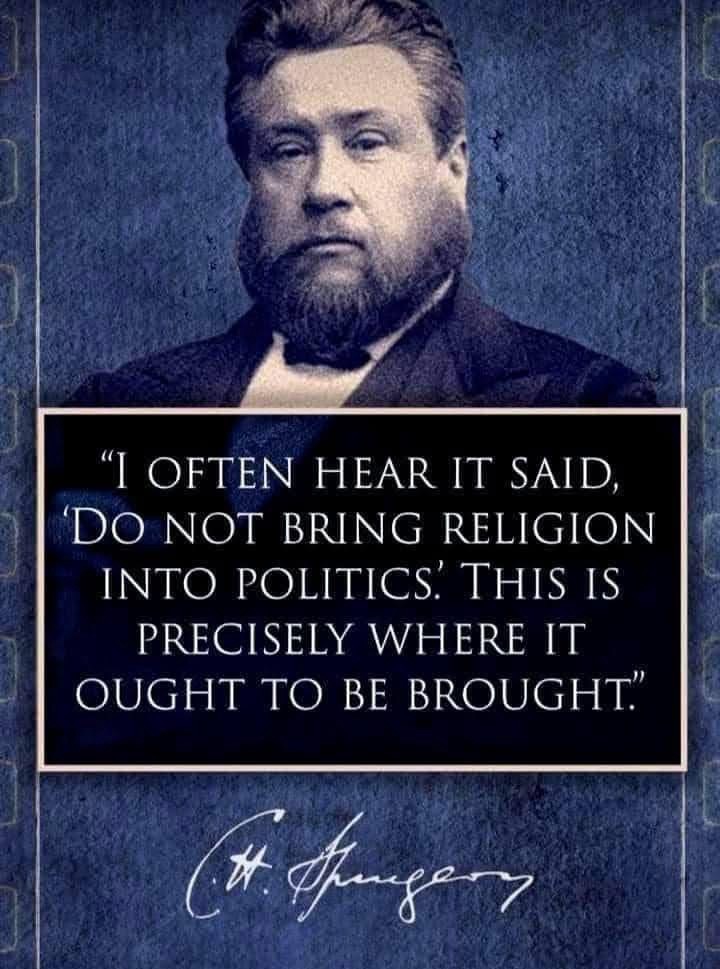
The world operates with an agenda and a rubric that is diametrically opposed to God’s standards. Many professing Christians, and their progressive churches, have adopted that worldly thinking into their doctrine. It has made them emaciated, weak and starved for truth. The church still requires leaders who can confront unrighteousness and lead God’s people (scattered about the nations) back to righteous living.
Men like Kirk, MacArthur, and Baucham rooted themselves in good doctrine so that they were able to speak publicly and boldly against untruth. They encouraged my heart, and the hearts of many other believers, to consider God‘s word and the implications it has on daily living. A believers’ politics and the way he engages with the culture are not mutually exclusive from the Christian faith. In fact, the two are inescapably intertwined.
It is easy to have opinions, but it takes humility and discipline to form good doctrine. It requires diligence and wisdom to work that doctrine into political application. Those three men did the work well.
Never miss a new post from AJ by filling in your email below and get his free e-devotional, Faith From The Chair.
A believers’ politics and the way he engages with the culture are not mutually exclusive from the Christian faith. In fact, the two are inescapably intertwined.
3. Don’t Wait For Others To Defend The Faith
When the world lost Kirk, I grieved the loss of what could have been. I had hoped to hear more from him, to learn more from his sharp mind and the way he defended his positions. He was so young and already spoke with such wisdom and thoughtfulness; I looked forward to witnessing where further spiritual maturity would take him.
My grief amplified when Founders Ministry announced that Baucham had died. Baucham always drew my eyes to the cross, challenging how I interpreted cultural matters. I trusted his perspective on current events because they came from a cherished regard for the Scriptures.
Their deaths followed the loss of MacArthur in July, a true pillar in the faith. I admit, I battled fear for the resolve of the church to persevere. The strength of the darkness seems to have grown so engulfing, and I questioned how Christianity would fare without these three voices defending it in the public square.
Of course, God knows how to preserve his church so that “the gates of Hell [will] not prevail against it” (Matt 16:18), but a weakened, anemic church has devastating effects on the world. I hated to think of my world experiencing that.
My first impulse was to pray God would raise up replacement voices. I wanted him to bring the church new defenders of the truth to confront the darkness. The instinct to pray for God’s help was not misguided, but praying for external heroes to pick up the mantle may have been.
I cannot shake the personal conviction to be a Christian voice, even without a public platform to stand on. As I have carried my physical disability through the majority of my Christian walk, my focus has been on leading an obedient life beyond reproach. I’ve failed countless times, but being a man of stalwart integrity and compassion has always been the aim. But I find myself wanting my witness to count for more.
I pray, by his grace, that I, along with all the redeemed, will be emboldened to cry out a rebuke to a bustling Babylon and watch as he brings dead bones to life.
We, individual Christians, all bear the responsibility to cry out into the wilderness and give an account. “But in your hearts honor Christ the Lord as holy, always being prepared to make a defense to anyone who asks you for a reason for the hope that is in you; yet do it with gentleness and respect” (1 Pet 3:15). There is hope within me. My life has been radically transformed by Jesus Christ, and his word is absolutely true. Declaring that truth in the public square and exposing idolatry is the most loving thing I can do for my neighbor.

Rest assured, I have no intention to exchange living by example for a life of nothing but finding a box to stand on and scream at the pagans around me. The Bible has plenty to say about how to live by example (Phil 1:27, Matt 5:16, Col 3:23). God cares how we live, but he also cares about how we speak. I don’t want cowardice or bashfulness to keep me from advocating for truth, confronting societal idols, or proclaiming the gospel. There are souls, both present and future generations, in need of political correction and godly reconciliation.
There will not be another Charlie, or Voddie, or Johnny Mac. The individual gifts and grace he poured into those three men was unique to them. But I’m confident he will call other clear voices to stand against political unrighteousness.
“But you are a chosen race, a royal priesthood, a holy nation, a people for his own possession, that you may proclaim the excellencies of him who called you out of darkness into his marvelous light.”
1 Pet 2:9

Never miss the latest post from AJ by submitting your email below, and also receive his free e-devotional, Faith From The Chair.
 AJ Canterbury
Leave a comment